kirtland's warbler
The Kirtland's Warbler (Setophaga kirtlandii) is a small threatened songbird with a very peculiar range: it winters in the Bahamas and only breeds in Northern Michigan and Wisconsin. This limited distribution is caused by its restrictive nesting requirements, as the species requires pure stands of young Jack Pine (Pinus banksiana). Kirtland's Warblers are ground nesters and use the dense, low branches of Jack Pines to conceal their nest. As the trees get taller, the lower branches are lost and the patch becomes unusable to the warblers.
Despite their low numbers, Kirtland's Warblers are pretty easy to find if you know where to go. A few friends from MSU and I traveled up to Roscommon, Michigan (the state's first bird city, see right), which is home to the annual Kirtland's Warbler festival.

At the festival, we paid $5 each and hopped on a red-and-green tourist trolley that took us east into the Huron National Forest. This was my first time Up North since moving to Michigan the prior summer, and the piney forests reminded me strongly of home. On the trolley, our guide pointed out a tall stand of Jack Pines and informed us that it was a Kirtland’s Warbler site in prior years, but was now too tall for the birds.


Since Kirtland’s Warblers need young Jack Pine, human fire suppression threatened the species in the 20th century as it allowed the Jack Pines to grow too fast and prevented their serotinous cones from germinating. Conservation efforts helped establish a rotating timber harvesting system, which allows some patches to always be suitable for the Kirtland’s Warbler.
Upon arriving, we had a tough time spotting the birds. They are noisy and males frequently sing territorially, but the habitat was quite dense and the birds were often low to the ground. Eventually, we were able to get eyes on a few individuals, although all were backlit and difficult to make out.

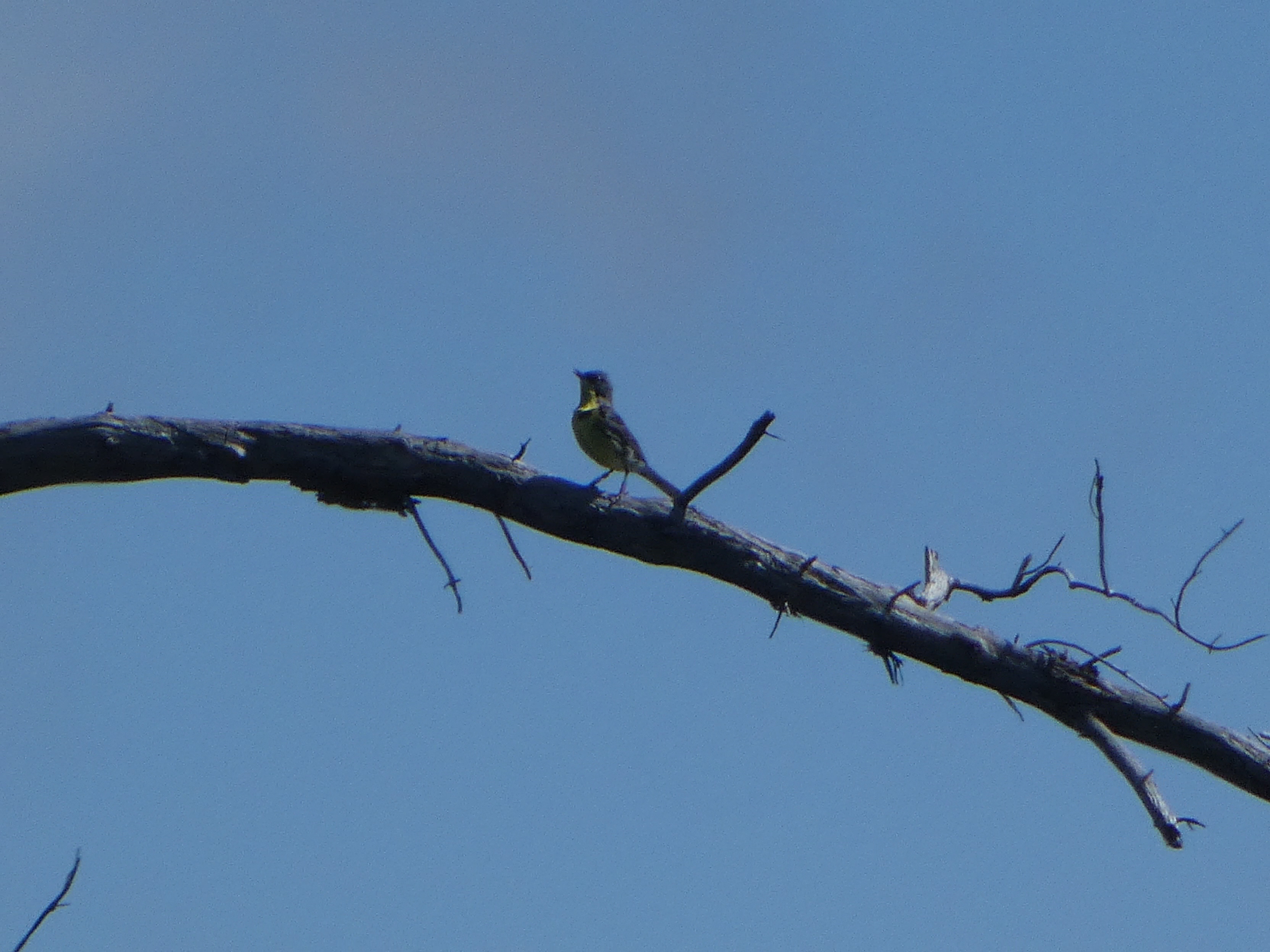
After returning to Roscommon, we were given hand-signed certificates from the guide as proof of our sighting and mementos of the adventure. On our return to Lansing, we stopped outside of Houghton Lake (the largest lake by surface area entirely within Michigan) to see the breeding habitat of another bird, the Black Tern (Chlidonias niger).

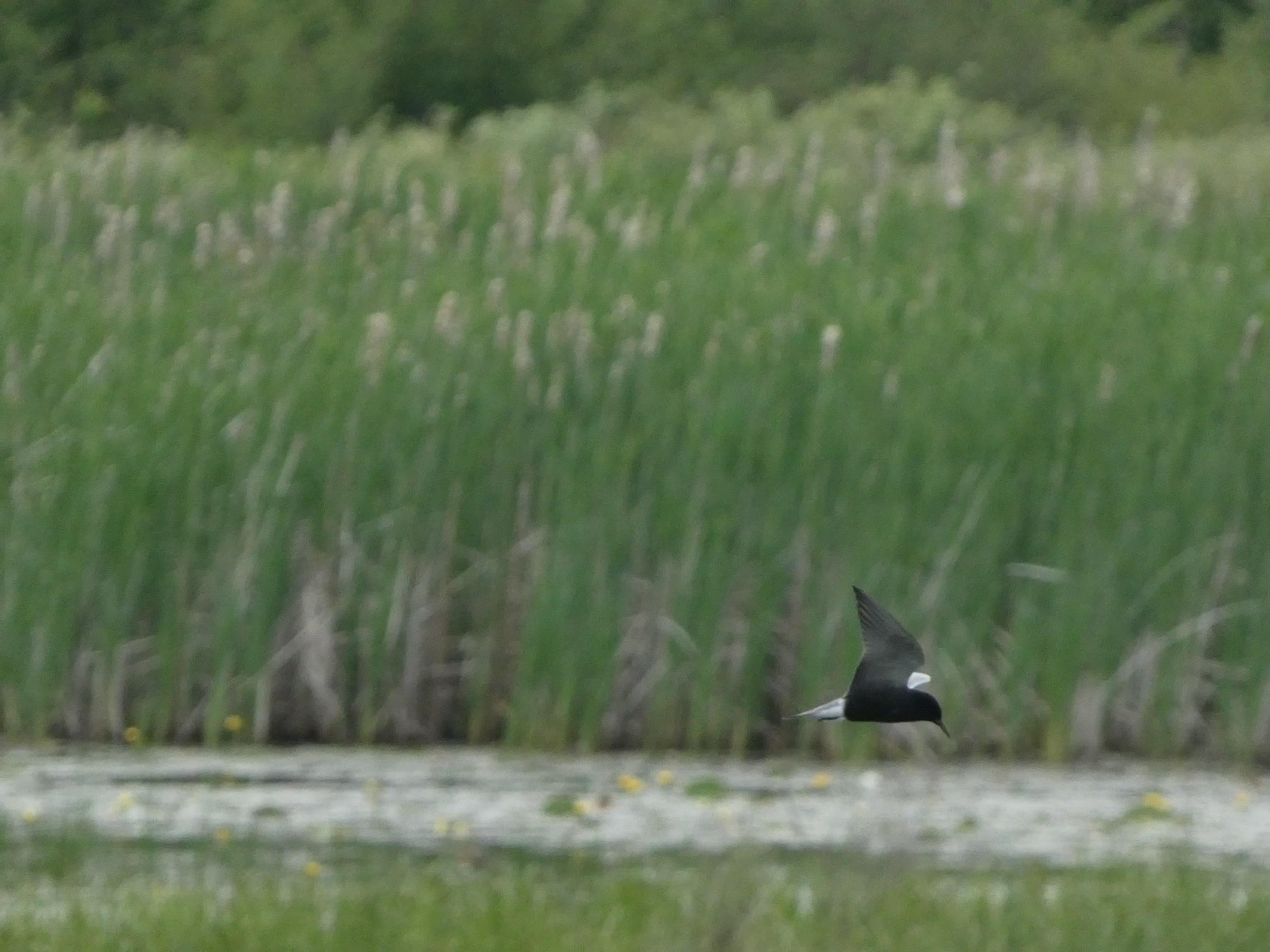
Parsing through the photos on the drive back to Lansing, I started to take in how much of a success story the Kirtland’s Warbler, and Michigan’s Jack Pine Barrens were in general. I often find myself worried about the field of ecology, with little hope that successful policies will be implemented and every species will be saved, but looking deeply at the last 50 years reveals a load of environmental wins across the planet. It’s hard to stay pessimistic when you get to experience on of the rarest birds in the world rebound so well.